

What is translated lists exactly which text the last two cover.
Translation uses the same AI as the editor’s other writing tools. If your editor has no AI features, the translate icons and Translate all are not shown, and you translate by hand.
Before You Translate
- Finish the primary version. The AI translates what is there. Text you change in the primary afterwards is not re-translated on its own.
- Add the languages. Translation fills existing language versions and does not create them. Add each language first; see Creating a multilingual template.
- Check the primary language is right. The primary is the default source for every translation.
Translate One Language
Open the globe dropdown in the top bar. In the Language settings panel, each language row has a translate icon. Hovering it shows Translate from primary. Click the icon on the language you want to fill.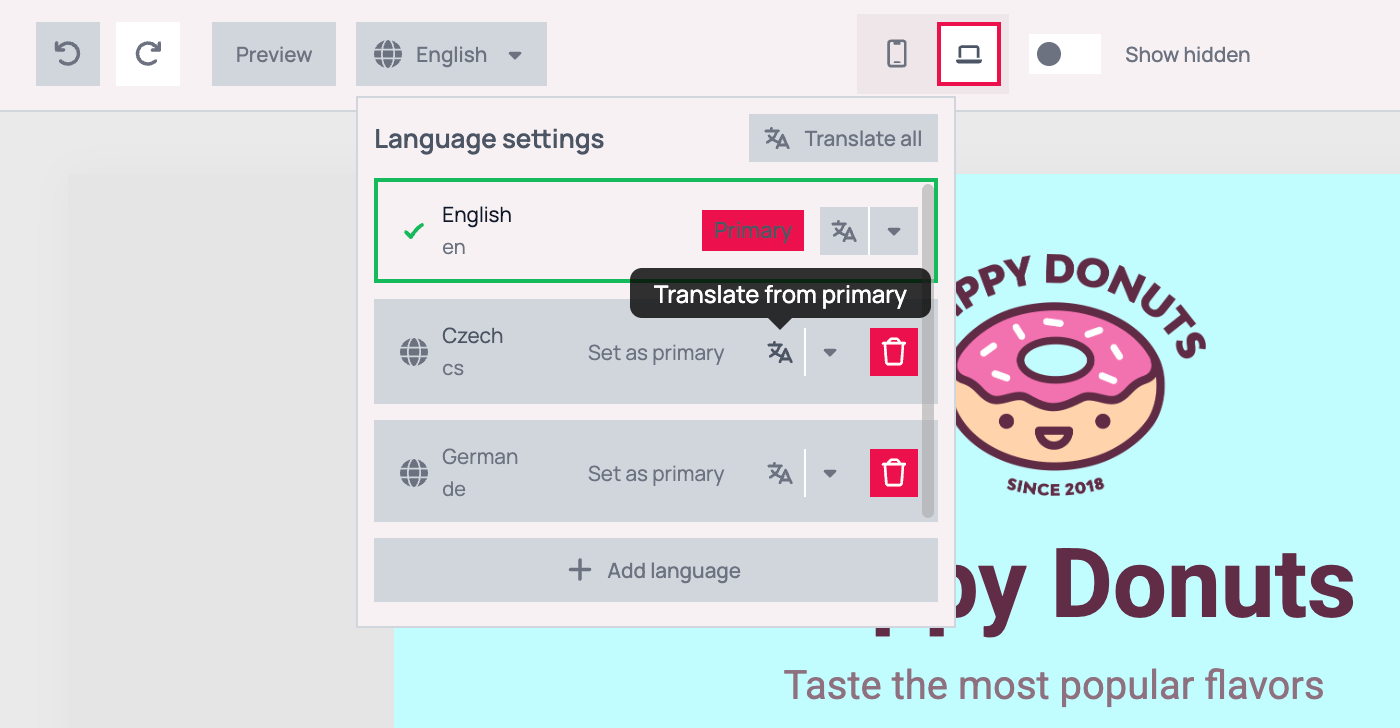
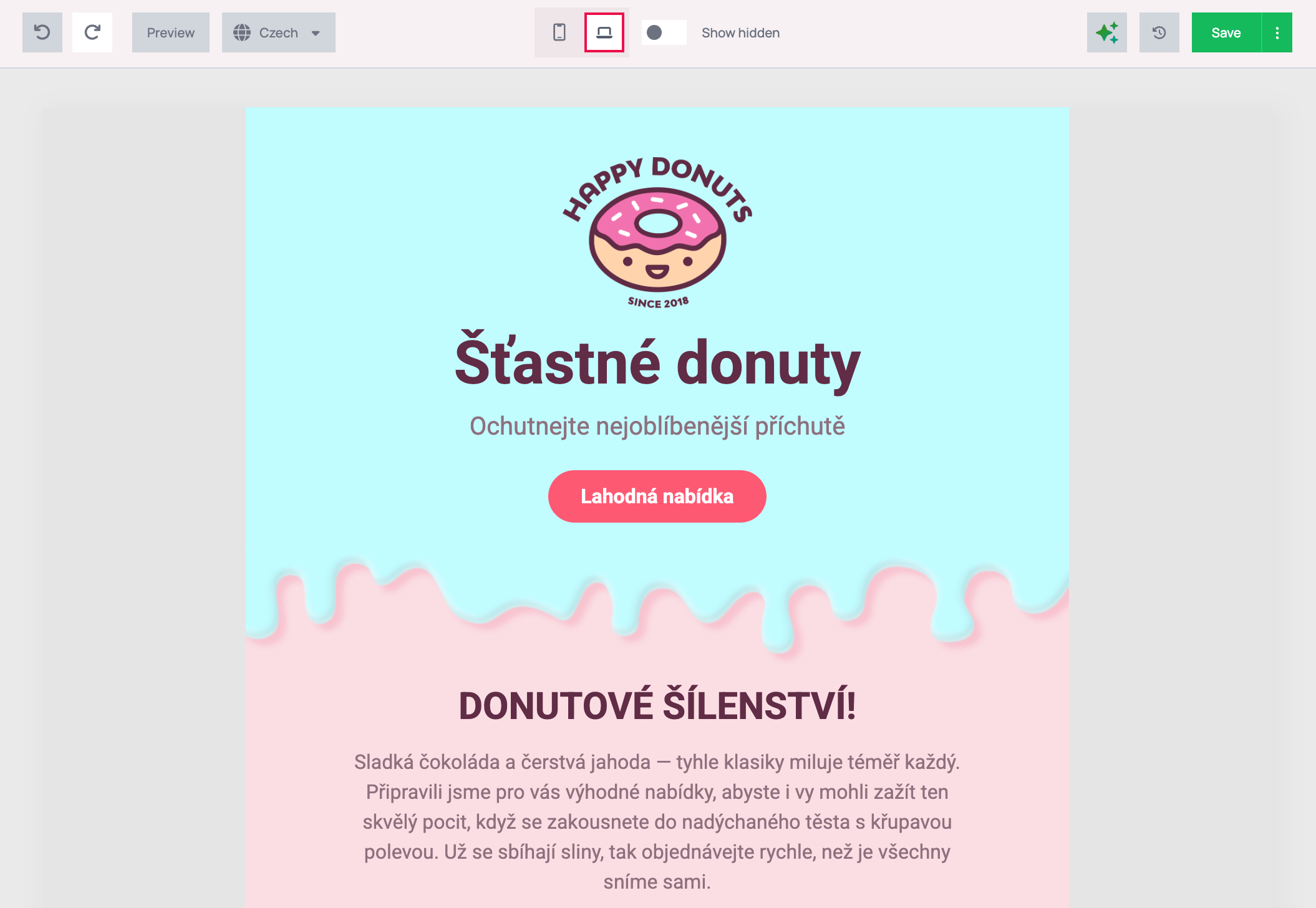
Choose a different source language
Once the template has more than one language, the translate icon is a split button. The arrow next to it opens a Translate from menu where you pick which language to translate from instead of the primary. The menu lists every language of the template, including the row’s own language. Pick a different one. This helps when another version is a better starting point. Translating Slovak from a finished Czech version, for example, usually gives a closer result than translating it from English.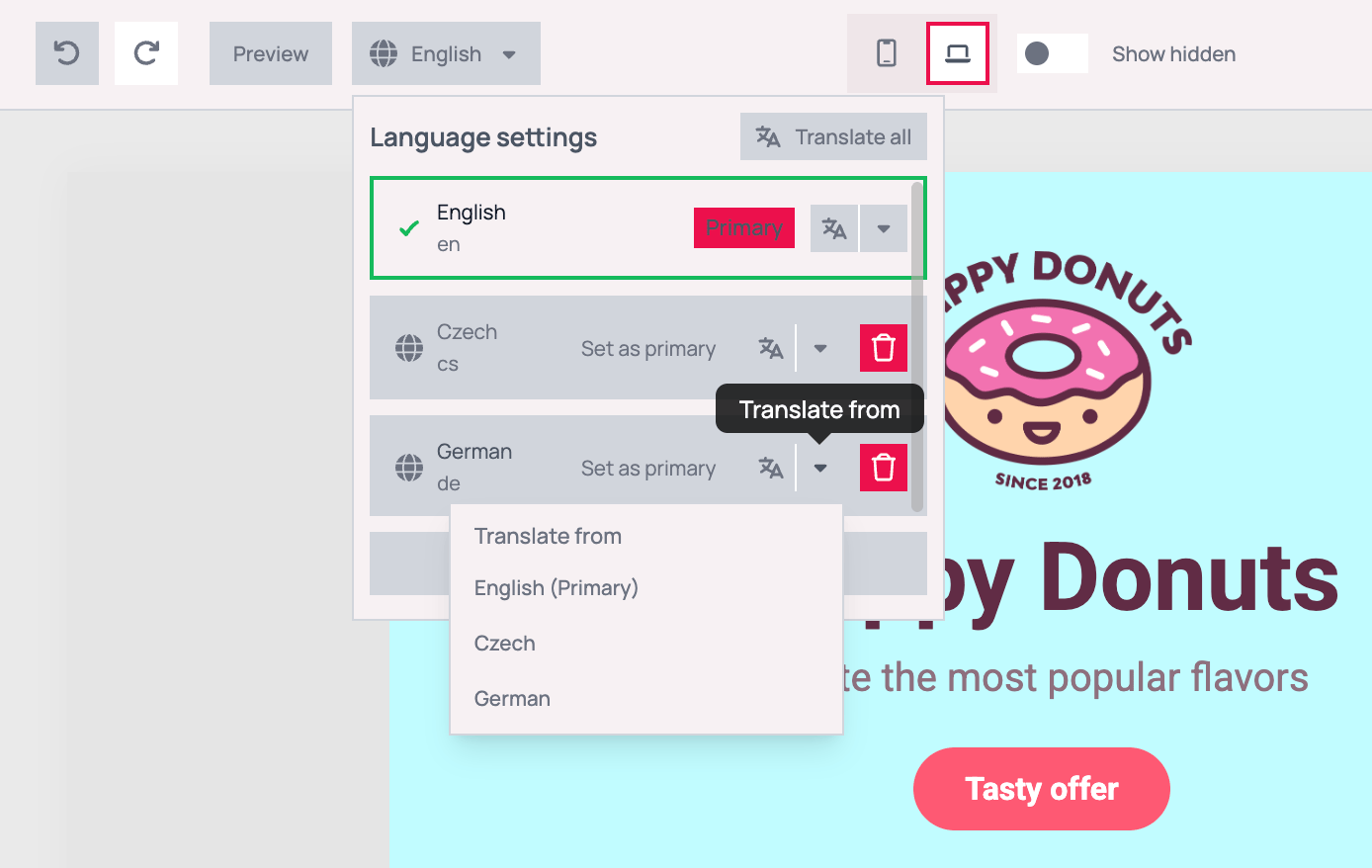
Translate All Languages
Once the template has more than one language, the panel header shows a Translate all button. It translates every secondary language from the primary in one run. A Translate all from primary dialog warns that existing translations may be overwritten. Click Translate to start.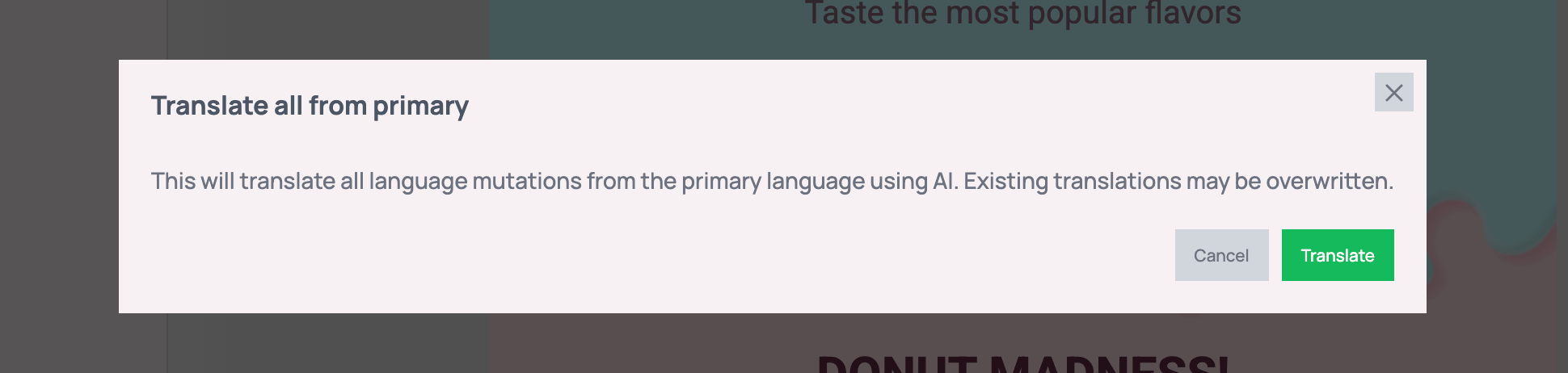
Translate a Single Block
Select the language you want in the dropdown, then select a text or button block and click the AI icon (the sparkles) in the block’s toolbar. Below Improve, Rephrase, Check grammar, Make longer and Make shorter there is a Translate to option that names the language you are editing, such as Translate to Czech.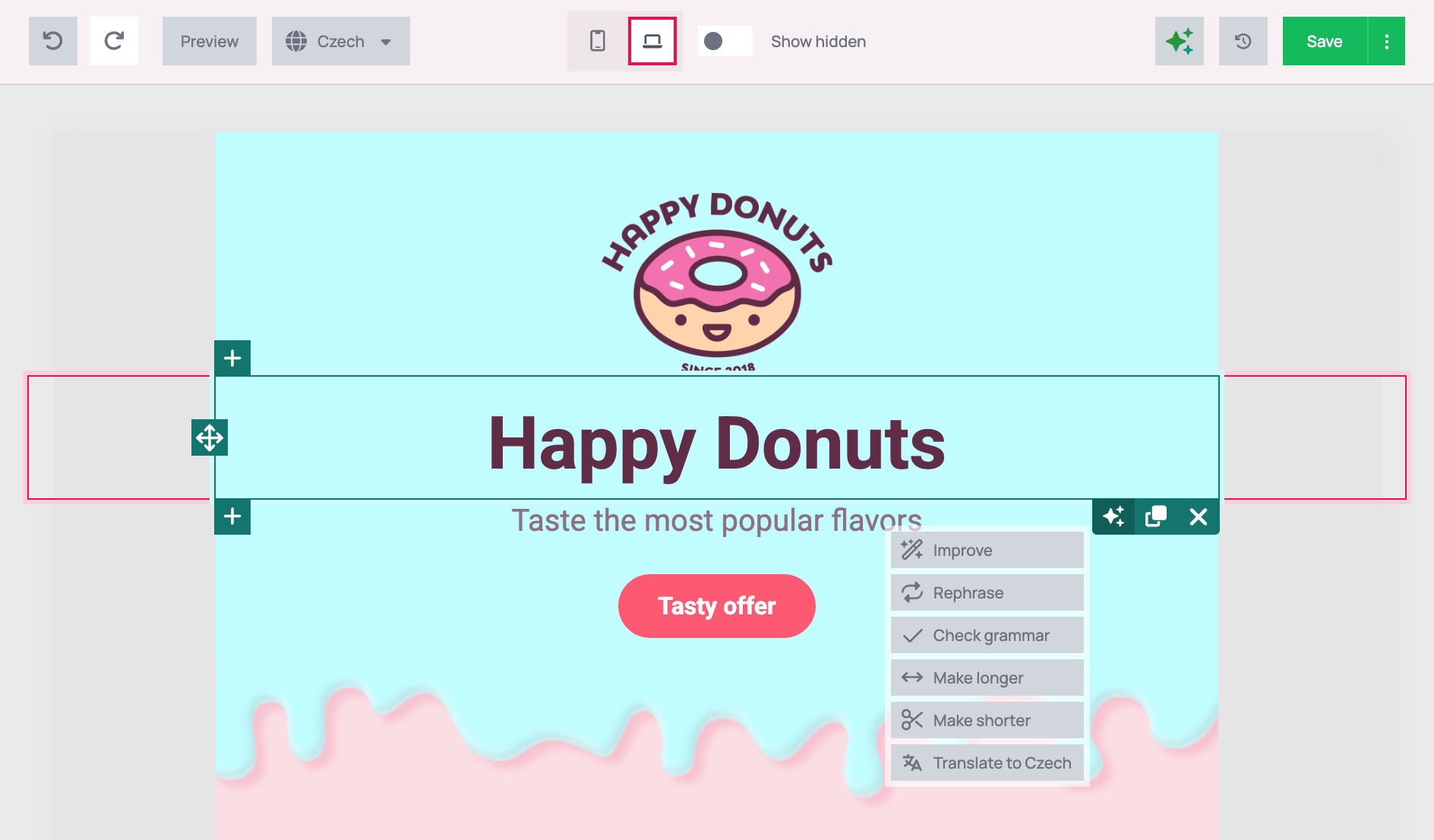
- You added or rewrote a block in the primary after the other languages were already translated.
- A translator has edited the rest of the version and you do not want to overwrite it.
- One block reads badly and you want a fresh attempt.
What Is Translated
The translate icon and Translate all cover all the text a language version can hold:- Text blocks and button labels.
- Alt text of images, GIFs and social icons, and image titles.
- HTML blocks. The text inside is translated and the markup is kept. Check these carefully, because custom HTML is where a translation is most likely to break something.
- The preheader (preview text).
- Item texts of Products blocks and the texts of Rating blocks.
What Is Not Translated
These stay as they are, and you change them by hand in each language:- Image files. An image with text in it, such as a logo with a slogan, has to be replaced per language.
- Links and sources. Button, image and social links and video URLs keep their value. Point them to the localized page yourself.
- Synced sections. They are skipped, and a Synced structures cannot be translated notice tells you so.
- Subject line, sender name and reply-to. They belong to the campaign, not the template. See Campaign setup.
{{first_name}} are kept exactly as written. For what a language version can hold in general, see How template languages work.
Review the Result
A machine translation is a draft. Before the template goes into a campaign:1
Read every version
Switch to each language in the dropdown and read it top to bottom, or have a speaker of that language do it. Watch brand names, product names and idioms. They are the most common mistakes.
2
Check merge tags and links
Confirm that merge tags are intact and sit in a natural place in the translated sentence, and that buttons lead to the right localized pages.
3
Preview desktop and mobile
Click Preview and flip through the languages. Translated text is often longer than the original, so check that buttons and headings do not wrap badly.
4
Save
Translations live in your editing session until you click Save. Until then, Undo reverts them like any other edit.
Troubleshooting
The translation failed or only some languages were translated
The translation failed or only some languages were translated
The AI service was busy, the request timed out, or it did not recognise the language. Nothing is lost: languages that were translated keep their result, and the failed ones keep what they had. Wait a minute and run the translate icon on the failed language’s row. Very long templates are more likely to time out. Translate those block by block.
The translation replaced text my translator had written
The translation replaced text my translator had written
The row icon and Translate all overwrite existing translations. Click Undo if you are still in the same session. Once saved, the earlier text cannot be restored from the panel. Use block translation for small updates.
Some blocks are still in the primary language
Some blocks are still in the primary language
Text inside image files and everything in synced sections is not translated. Replace those images per language, and see What is not translated. If ordinary text blocks were left out, the run probably failed part-way. Translate that language again.
The primary language text changed after I clicked a translate icon
The primary language text changed after I clicked a translate icon
You clicked the translate button on the Primary row, which rewrites the primary content. Click Undo.
A block was translated into the wrong language
A block was translated into the wrong language
Block translation targets the language shown on the dropdown. Undo, select the right language, and translate the block again.
I changed the primary text and the other languages did not update
I changed the primary text and the other languages did not update
Translations are not linked to the primary after they are made. Translate the changed block again in each language, or run the row’s translate icon if nothing in that version was edited by hand.
Next Steps
Multilingual templates
Add, switch, reorder and delete language versions
How template languages work
What is stored per language and how fallback works
Campaign setup
Translate the subject and sender per language
Multilingual best practices
Quality checks for translated campaigns